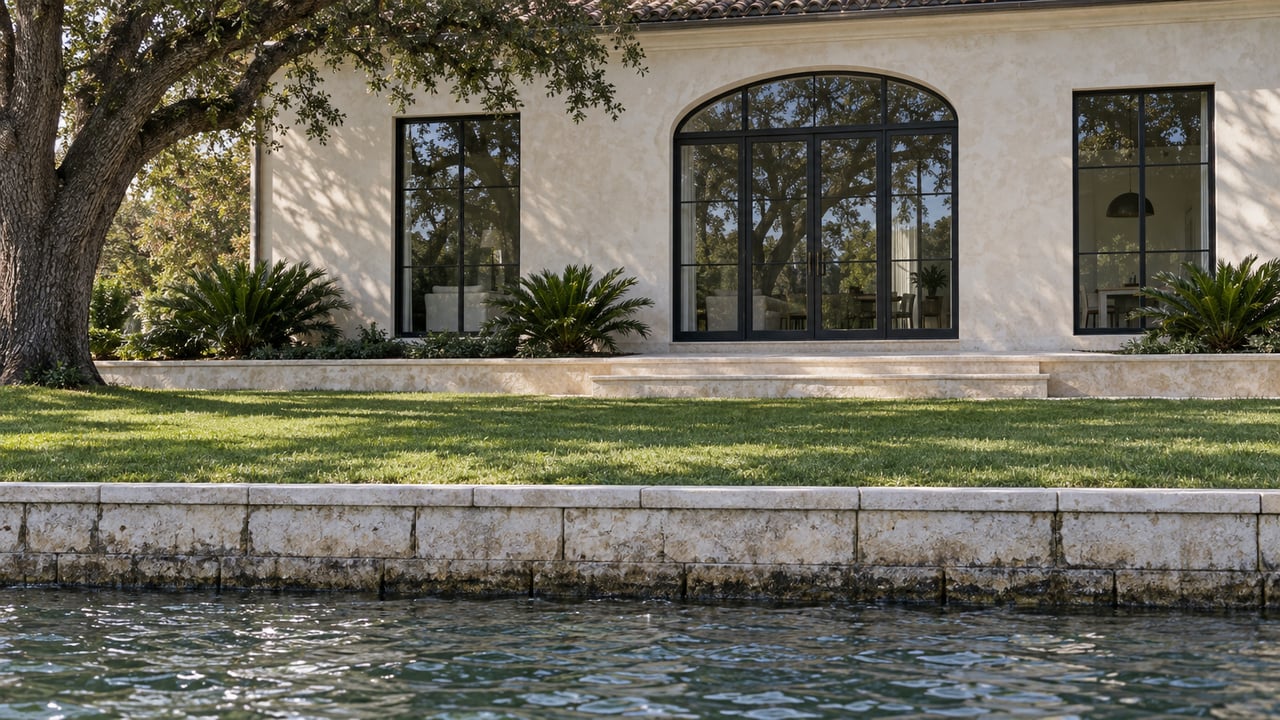
What Windermere Buyers Should Know About Butler Chain Dock Permits
October 1, 2026
October 1, 2026
What is a Windermere dock actually worth if nobody can prove it was ever permitted?
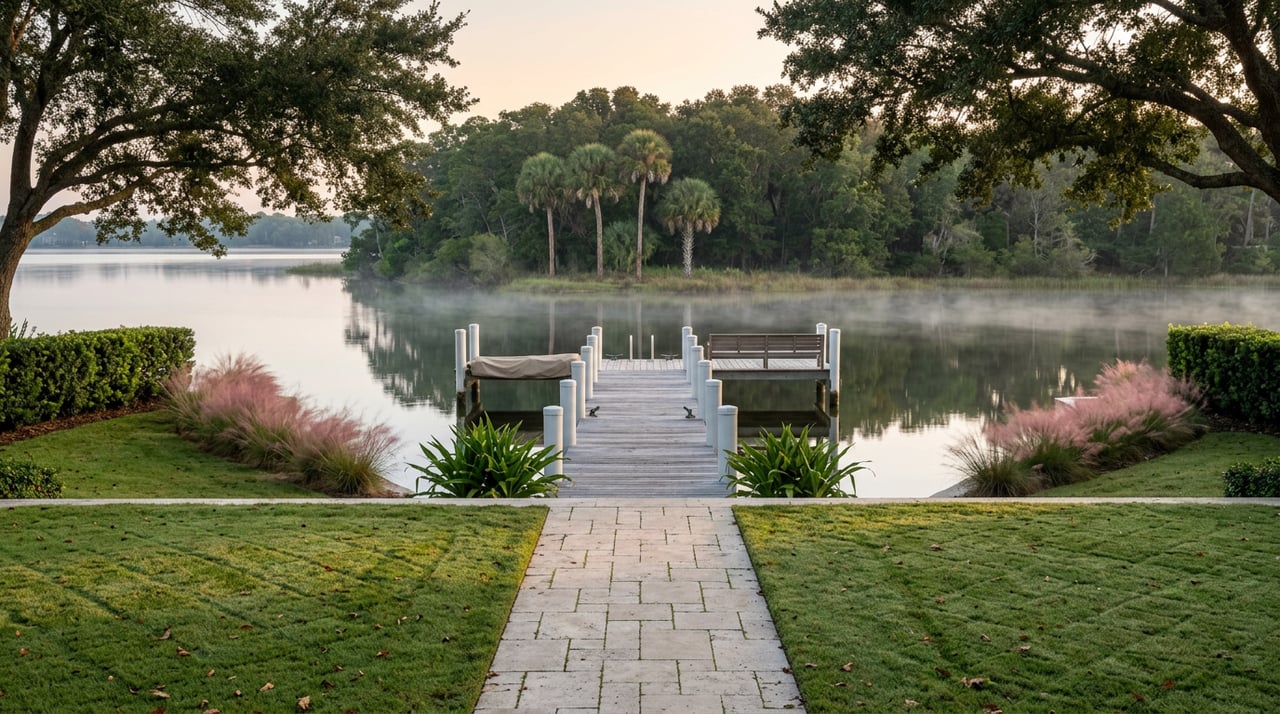
The question rarely comes up during a showing. It surfaces during due diligence, usually after an offer is already signed, when a title search or a marine contractor's inspection turns up a structure with no paper trail behind it. On Windermere's Butler Chain, where a listing might describe a home as lakefront, lake access, or lake view, those three words are not stylistic choices. They describe three different kinds of relationship to the water, and the gap between what a dock looks like and what a dock is permitted to be is where a well-priced deal slows down or quietly falls apart.
Buyers touring the Chain tend to treat "lakefront," "lake access," and "lake view" as points on the same spectrum. They are closer to three separate kinds of listing description, each with its own price ceiling.
| Term on the listing | What it actually means | What it typically costs |
|---|---|---|
| Lakefront | Waterfront frontage, with any dock and its permit status to be verified | Highest premium. Local specialists have put the gap at $300,000 to more than $3 million over a comparable home with only a view, depending on frontage, dock condition, and which lake it touches |
| Lake access | A listing that describes a community dock, ramp, or easement | A middle premium tied to how close and how exclusive that community access point is |
| Lake view | A sightline to the water | The smallest premium, priced closer to a comparable inland home |
Where a home sits inside the Butler Chain matters too. Canal connections between lakes, including the passage locals call the Windermere channel, run idle-speed only, so a canal-front lot can still reach open water but only after a slow transit through a no-wake zone. Main-lake frontage on Lake Butler or Lake Down skips that transit entirely, which is one reason two homes with technically identical "navigable access" can carry different price tags before either owner has spent a dollar on the dock itself.
None of that pricing logic holds, though, if the dock behind the price tag was never actually permitted to be there.
Orange County's dock construction ordinance carries a provision that quietly shapes a large share of older Butler Chain properties. Docks built on or before December 19, 1988 are allowed to remain as originally constructed, and routine maintenance on those structures does not require a county permit. The exemption ends the moment repair or replacement work touches more than half the dock. Past that threshold, the current version of the ordinance applies in full, which can mean new setback rules, new depth requirements, and a permitting process the original 1980s dock never had to clear.
That threshold is easy to miss. A homeowner who replaces decking and pilings in phases over a few storm seasons may not realize the cumulative work has crossed 50 percent until a buyer's inspector or a county reviewer counts it up. For a buyer, it means the dock in the listing photos is not automatically the dock you inherit the right to repair on the same terms the seller enjoyed. You can read the full ordinance language directly through Orange County's municipal code, and a good pre-offer step is confirming when the current dock was built and how much of it has been touched since.
The county does not treat this as a formality. It enforced the line this year.
In June 2026, Orange County's Board of County Commissioners denied an after-the-fact permit modification for a seawall and dock at a property on Sandy Shores Drive, on a Butler Chain canal. An as-built survey showed two seawall sections and the dock had been constructed waterward of where the original permit allowed. The county's Environmental Protection Division documented incomplete inspections and a navigation hazard in the canal, and the board heard objections from both neighboring property owners and the Butler Chain advisory board before voting to deny the request. You can read the meeting summary through Citizen Portal's coverage of the hearing.
The specifics of that case matter less than what it demonstrates about process. An after-the-fact permit is not a rubber stamp. Once a structure is built outside its approved footprint, the owner is asking the county to bless something already in the water, in front of an advisory board made up of people who live on the same canal system and a commission that can and did say no. For anyone buying a home where the current dock or seawall looks slightly different from what an older survey shows, that gap is worth resolving before closing rather than after.
There is a second, more mechanical reason permit timing matters right now. Orange County's boat dock, boat ramp, lakeshore protection, and shoreline alteration and dredge-and-fill permit fees have not been updated since 2007. Pending final board approval, new fees are scheduled to take effect on October 1, 2026, based on a cost-of-service study the county says is meant to improve review timelines and staffing.
For a buyer or seller with a dock or seawall project already in motion, that date is close enough to change the math on a pending application. For anyone negotiating a renovation credit into a contract right now, whether the permit was filed in September or is filed in October could change the fee attached to it. It is a detail worth raising with whoever is coordinating the transaction, not something to discover after the fact.
A few checks turn this from an abstract risk into a short list:
None of this diminishes what makes the Butler Chain worth the premium buyers pay for it. It just means the premium is attached to a set of legal facts, not to the water itself, and those facts are checkable before you are contractually committed to them.
If a dock predates 1988, does it ever need a county permit? It can. The construction itself may be grandfathered, but repairing or replacing more than half the structure brings it back under the current ordinance, including current permitting requirements.
I'm in the middle of a permit application. Does the October 1 fee change affect me? Possibly, depending on when the application is filed relative to the effective date. Confirm directly with Orange County's Environmental Protection Division rather than assuming the current fee schedule will apply through completion.
Does "lake access" mean I can eventually build my own dock? The listing term alone doesn't settle that; check the deed and permit history before assuming what rights come with the property.
Windermere's Butler Chain rewards buyers who understand what they are actually purchasing before they compete for it, and it protects sellers who can document that their dock, seawall, and permits hold up to the same scrutiny a county board just applied down the canal. If you are weighing a purchase or a sale on the Chain and want someone to walk the permit history before it becomes your problem, ELUXE Realty is glad to schedule a private consultation.
This article is general information, not legal, tax or financial advice. Consult a qualified professional about your situation.
Stay up to date on the latest real estate trends.

Work with Eluxe Realty and experience a refined, client-first approach to luxury real estate, where innovation, precision, and white-glove service come standard.