Inside Winter Park: Lifestyle, Architecture And Daily Rhythm
May 28, 2026
May 28, 2026
If you have ever wondered why Winter Park feels distinct from so many other Central Florida addresses, the answer is not just location. It is the way architecture, parks, lakes, and everyday routines come together in a compact, highly recognizable setting. If you are thinking about buying, selling, or simply getting to know the area better, this guide will help you understand how Winter Park lives day to day and why its character matters. Let’s dive in.
Winter Park is a small city just north of Orlando in Orange County, with an estimated 30,835 residents as of July 2024 spread across 8.76 square miles of land. That compact footprint is part of what gives the city its close-knit feel and easy rhythm.
The city describes itself as an urban village, and that label fits. You see it in the mix of brick streets, mature trees, lakes, parks, museums, shops, dining, and the presence of Rollins College woven into daily life.
Winter Park has a pace that feels active without feeling rushed. Many of the city’s recurring routines center on a few key places, especially Park Avenue, Central Park, the lakes, and the Rollins College area.
Park Avenue functions as the civic and commercial heart of Winter Park. The Winter Park Chamber organizes the district around shopping, dining, arts and leisure, and hotels, which makes it one of the city’s main gathering places throughout the week.
For residents, this often means casual walks, coffee stops, dinner plans, and errands that feel more pleasant than purely practical. For buyers, it helps explain why proximity to downtown Winter Park often carries strong lifestyle appeal.
At the center of downtown, Central Park serves as the city’s 11-acre focal point. It is not just green space. It is one of the places where Winter Park’s public life becomes most visible.
The park hosts signature events such as the Winter Park Sidewalk Art Festival and the Old Fashioned 4th of July Celebration. Those recurring events help shape the city’s seasonal rhythm and reinforce the sense that Winter Park is designed to be experienced outdoors.
One of the clearest examples of Winter Park’s weekly routine is the Saturday Farmers’ Market. It runs every Saturday morning from 8 a.m. to 1 p.m. in the Central Park West Meadow.
The market building itself adds to the city’s character because it is the former train depot, complete with original brick walls and wood sliding doors. That blend of everyday use and preserved history says a lot about how Winter Park values continuity and place.
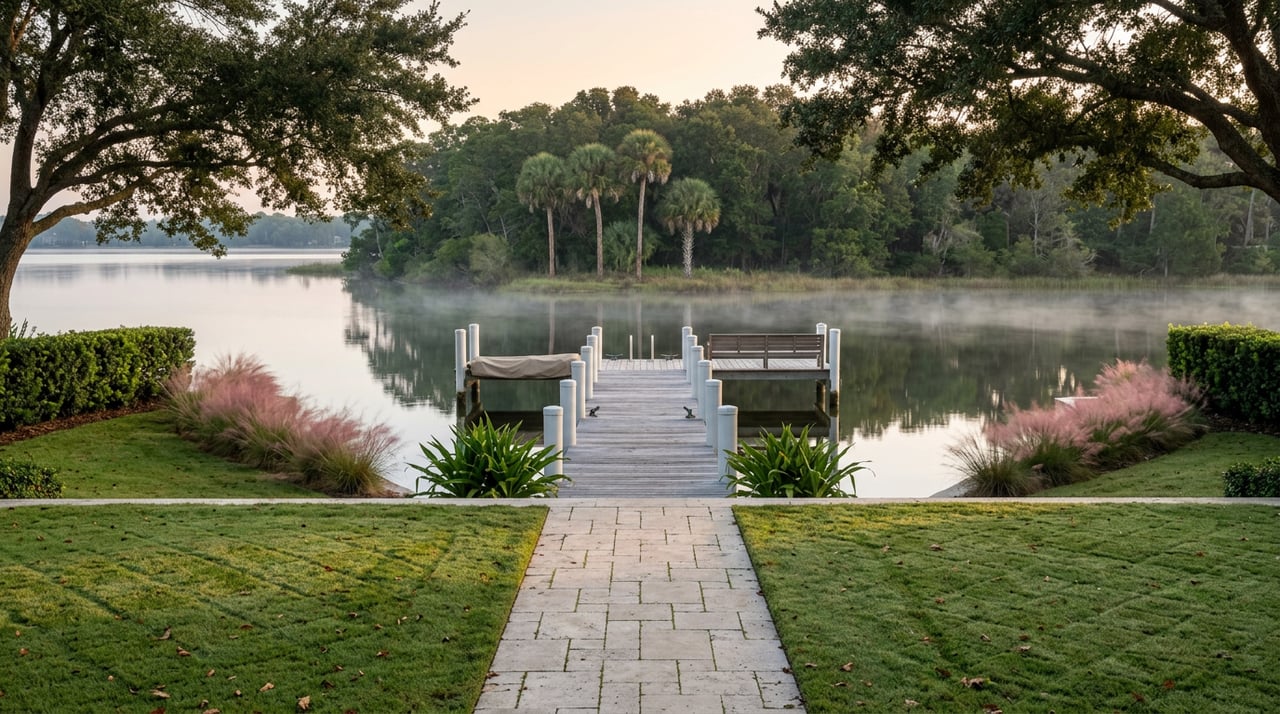
Water is part of daily life here, even for people who do not live directly on a lake. The city notes that its lakes are a defining feature of community life, and that is easy to see in the way recreation and scenery are woven into the local experience.
The Scenic Boat Tour operates from Lake Osceola, while Rollins College sits on the north shore of Lake Virginia. Beyond the downtown core, Lake Baldwin Park offers a dog-friendly setting, and Cady Way Park connects residents to the Cady Way Trail.
Rollins College gives Winter Park an academic and cultural anchor that reaches beyond campus boundaries. Its lakefront setting and long-standing architectural identity contribute to the city’s visual character, especially near the lakes and nearby residential streets.
It also adds another layer to everyday life through campus events and the steady presence of students, faculty, and visitors. In a city of this size, an institution like Rollins has a meaningful effect on atmosphere and activity.
Winter Park’s park system is a major part of its appeal. The city says it has 75 parks, with key anchors including Central Park, Mead Botanical Garden, Kraft Azalea Garden, Lake Baldwin Park, Shady Park, and Martin Luther King, Jr. Park.
That amount of green space helps explain why the city feels balanced. Even when you are near active streets or commercial areas, there is usually a sense that nature is close by.
For homeowners, that matters in practical ways too. Parks and gardens contribute to how a neighborhood feels on a daily basis, from morning walks to weekend plans to the overall visual rhythm of the streetscape.
Winter Park’s architecture is one of its strongest signatures. The city began as a planned community in the 1880s around Central Park and Park Avenue, and that original structure still shapes the way the city looks and functions today.
The city says its unique character comes in part from its historic architecture. More than 700 historic structures have been recorded, representing 7 percent of residential dwellings and slightly less than 5 percent of commercial buildings.
If you explore Winter Park’s historic areas, several architectural styles appear again and again. The strongest recurring styles in the historic fabric are:
These styles give Winter Park a layered look rather than a single-note identity. You can move from modest bungalow streets to more formal revival homes to lakefront villas, all within a relatively compact city.
Winter Park is not defined by one housing type. Instead, its character comes from several distinct pockets, each with its own architectural patterns tied to the city’s broader planning history.
The downtown historic district runs along Park Avenue and is recognized for early settlement, architecture, community planning, commerce, and transportation. Built within the original 1880s town plan, it spans about 75 acres and includes roughly 93 resources.
The district is mostly one- to two-story vernacular commercial fabric with influences that include Bungalow, Classical Revival, Colonial Revival, Mediterranean Revival, Mid-Century Modern, Mission, and Shingle. Central Park helps connect all of it both physically and culturally.
Several residential areas stand out for their concentration of specific home styles. Golfview and north Interlachen contain intact collections of Colonial Revival residences.
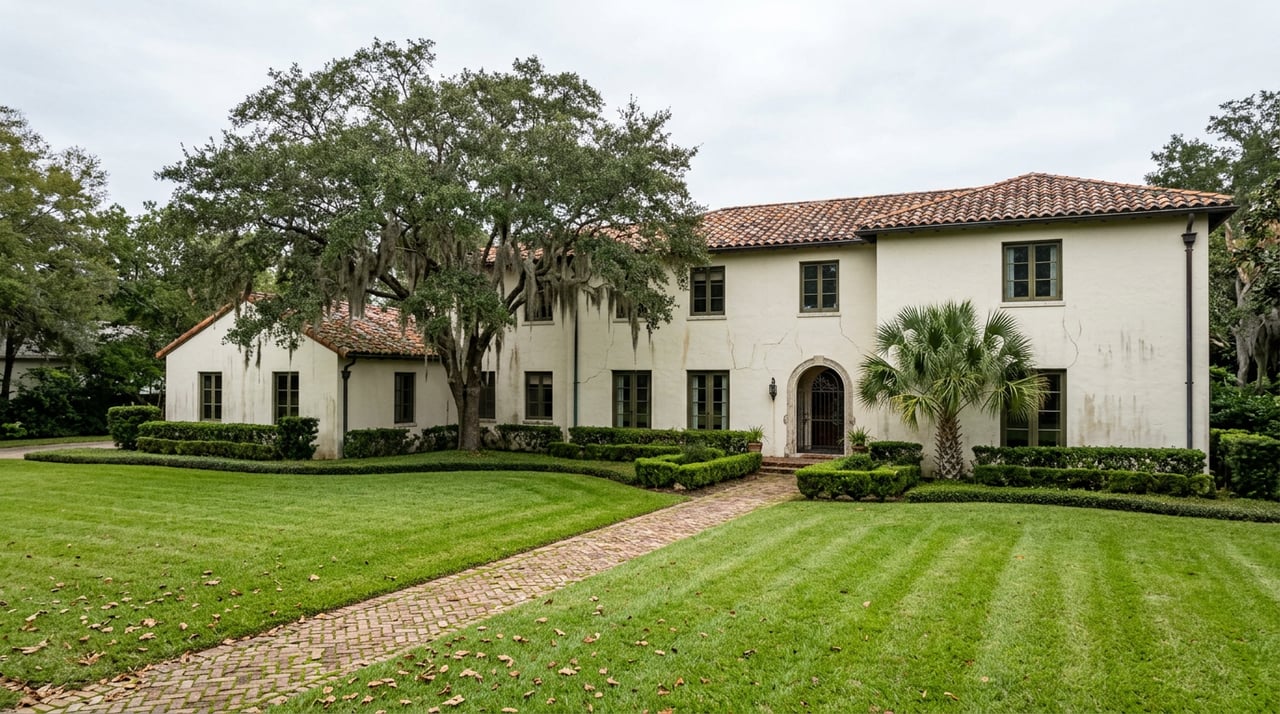
Orwin Manor and Virginia Heights are noted for small Spanish Colonial houses. College Place and Hannibal Square show bungalow housing fabric, and the city’s survey describes Hannibal Square as retaining a notably high level of architectural integrity and cohesiveness.
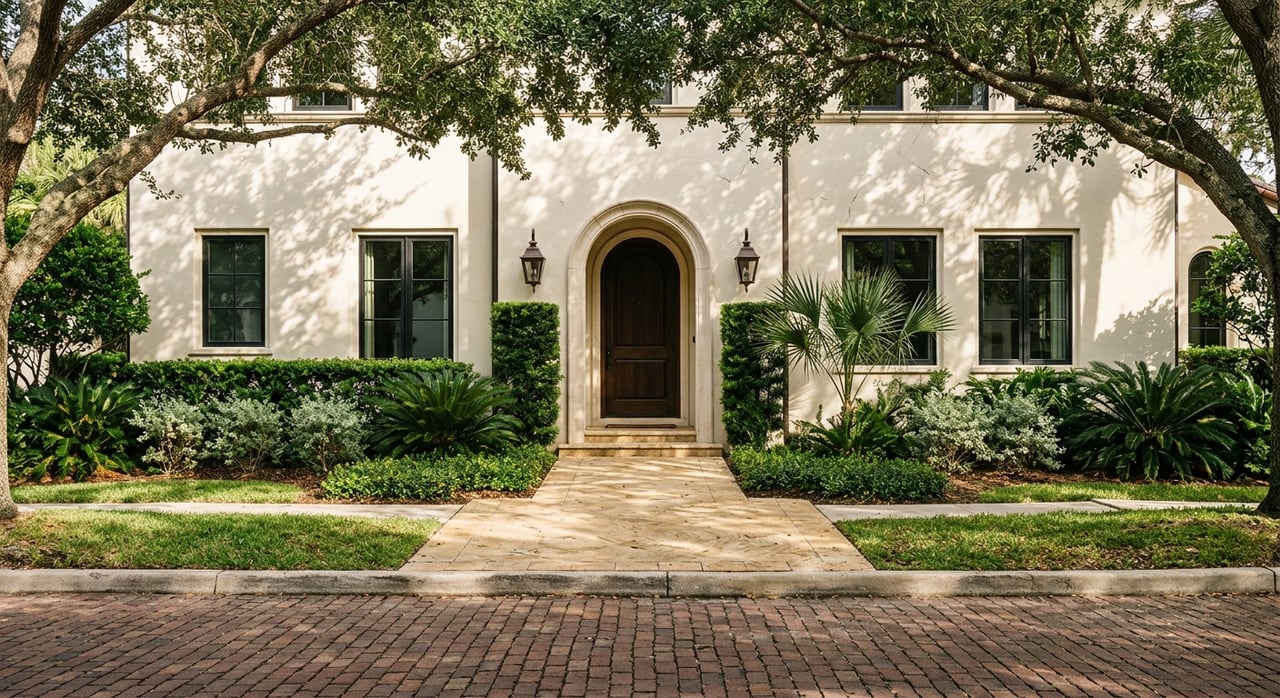
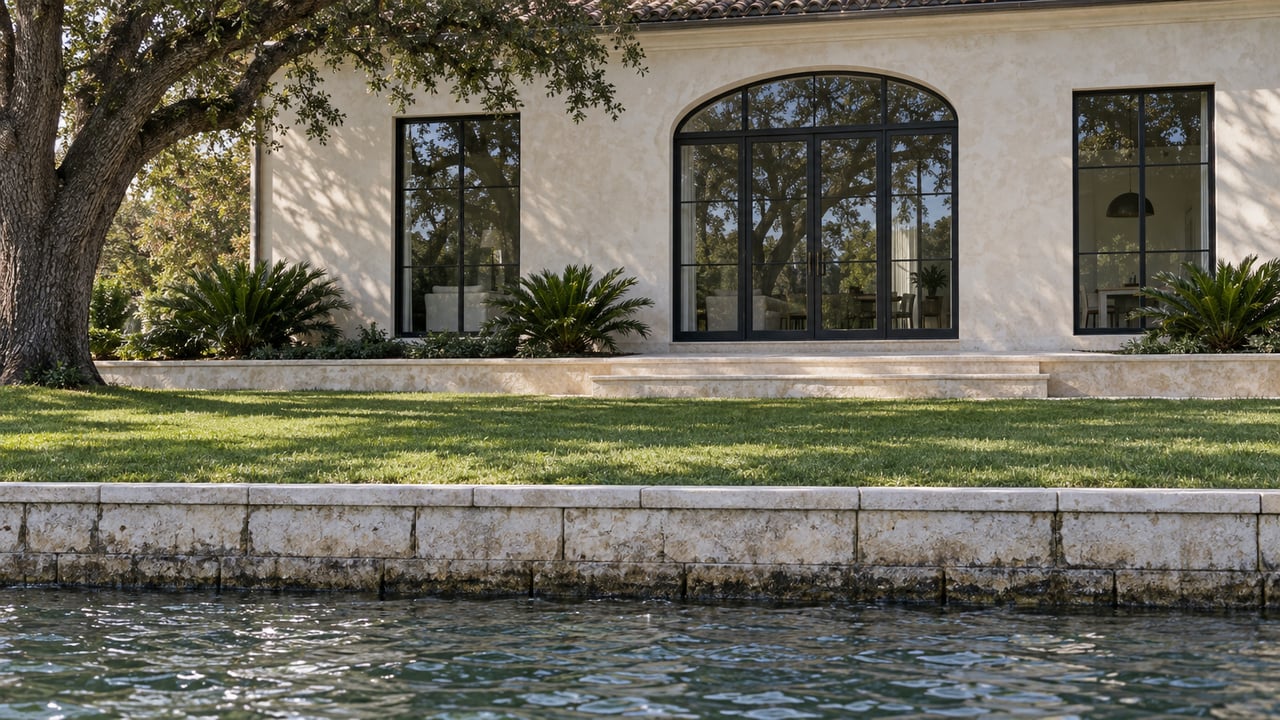
Along Palmer Avenue and Via Tuscany, larger estate homes face Lake Osceola and Lake Maitland. The city’s survey highlights Spanish Colonial and Mediterranean Revival villas in these lakefront corridors.
That lakefront architecture pairs naturally with the Rollins campus nearby, which the college says retains a Spanish Colonial Revival flavor from the 1920s and 1930s. Together, these areas help create some of Winter Park’s most recognizable visual moments.
Winter Park often reads as an established, long-term residential market. Census data for 2019 through 2023 show a 66.0 percent owner-occupied housing rate, a median owner-occupied home value of $676,800, a median household income of $98,076, and a mean travel time to work of 23.8 minutes.
Those numbers do not guarantee future appreciation, but they do support the idea of a place where many residents are putting down roots. In a city where design, streetscape, and preservation carry visible importance, buyers and sellers benefit from understanding how character influences value perception.
For sellers, that may mean presentation and positioning should reflect the home’s architectural story and setting. For buyers, it may mean looking beyond square footage alone and paying close attention to block-by-block context, historic details, and long-term fit.
If you are considering a property in one of Winter Park’s historic areas, it is important to understand the city’s preservation framework. Historic status can affect what changes are reviewed and how future work is approached.
The city reviews certificates for additions and alterations on historic properties. Buyers planning exterior changes or expansions should verify whether a property is locally designated before making assumptions about what is possible.
This is especially important if you are comparing a historic home with newer construction. The purchase decision may involve not just style preference, but also comfort with the review process and design expectations.
For new construction in a historic district, the city says infill should complement traditional patterns rather than copy a style literally. The city’s preservation guidance also expects new work to fit the district’s scale, materials, roof form, massing, setback, and window rhythm.
That approach helps protect overall character while still allowing properties to evolve. It also means that context matters in Winter Park in a very real way, both visually and during the planning process.
Winter Park’s appeal is not based on one headline feature. It comes from the way several elements reinforce each other, including walkable gathering places, a strong park network, lakefront scenery, preserved architecture, and a compact footprint that keeps daily life connected.
If you are relocating, that can translate into a city that feels legible quickly. If you already live in Central Florida, it can feel like a place where design, routine, and setting are unusually well aligned.
For buyers, that often means choosing between different versions of the Winter Park experience, from downtown-adjacent convenience to quieter residential pockets to lake-oriented streets. For sellers, it means your home is often part of a larger story about architecture, lifestyle, and place that deserves thoughtful positioning.
If you want help understanding how a specific street, architectural style, or property fits into the bigger Winter Park picture, Eluxe Realty offers private consultations with a strategic, concierge-style approach.
Stay up to date on the latest real estate trends.
Work with Eluxe Realty and experience a refined, client-first approach to luxury real estate, where innovation, precision, and white-glove service come standard.